These two terms are starting to be used interchangeably, which causes confusion and leads businesses to neglect one or the other. They overlap significantly, but they’re not the same thing. Understanding the distinction will help you allocate your effort more effectively.
What Local SEO Actually Is
Local SEO is the practice of optimising your online presence to appear in geographically relevant search results — specifically the Google Local Pack (the map results with three business listings) and the organic search results beneath it.
The core activities of local SEO include:
- Google Business Profile optimisation — complete categories, descriptions, services, photos, regular posts
- NAP citation building — getting your business listed consistently across directories
- Review acquisition and management — volume, recency, and response
- On-page local signals — location pages, service area content, local schema markup
- Link building from local sources — local news mentions, community organisations, chamber of commerce listings
The goal is to rank in Google’s local results when someone searches for a service in a specific location. “Electrician Ipswich,” “plumber near me,” “café Toowoomba” — these are the queries local SEO targets.
What AI Search Optimisation Is
AI search optimisation is the practice of ensuring your business is surfaced and recommended by AI-powered platforms: ChatGPT, Perplexity, Google AI Overviews, Microsoft Copilot, and Gemini.
These platforms don’t return a ranked list of links. They generate answers, and they cite the sources they drew from to produce those answers. Being included means your business or your content was assessed as credible and relevant enough to cite.
The core activities of AI search optimisation include:
- Question-answering content — structured content that directly answers the questions your customers ask before they book
- E-E-A-T signals — demonstrating Experience, Expertise, Authoritativeness, and Trustworthiness through attributed content, credentials, and third-party mentions
- Schema markup — structured data that makes your business type, location, services, and content machine-readable without ambiguity
- Authority building through citations — being mentioned in authoritative, topically relevant sources (industry associations, local news, trade directories)
- Content depth — enough substantive content on your key services that AI platforms can draw on your site as a reliable source
Where They Overlap
The overlap is substantial, which is why the two are often conflated.
| Element | Local SEO | AI Search Optimisation |
|---|
| Google Business Profile | Central | Very important |
| NAP consistency | Essential | Important |
| Review volume and recency | Ranking factor | Authority signal |
| Schema markup | Helpful | Essential |
| Content quality | Important | Central |
| Citation building | Core activity | Supporting signal |
| E-E-A-T | Indirect benefit | Direct requirement |
A well-executed local SEO strategy provides a strong foundation for AI search visibility. But it doesn’t get you all the way there.
Where They Diverge
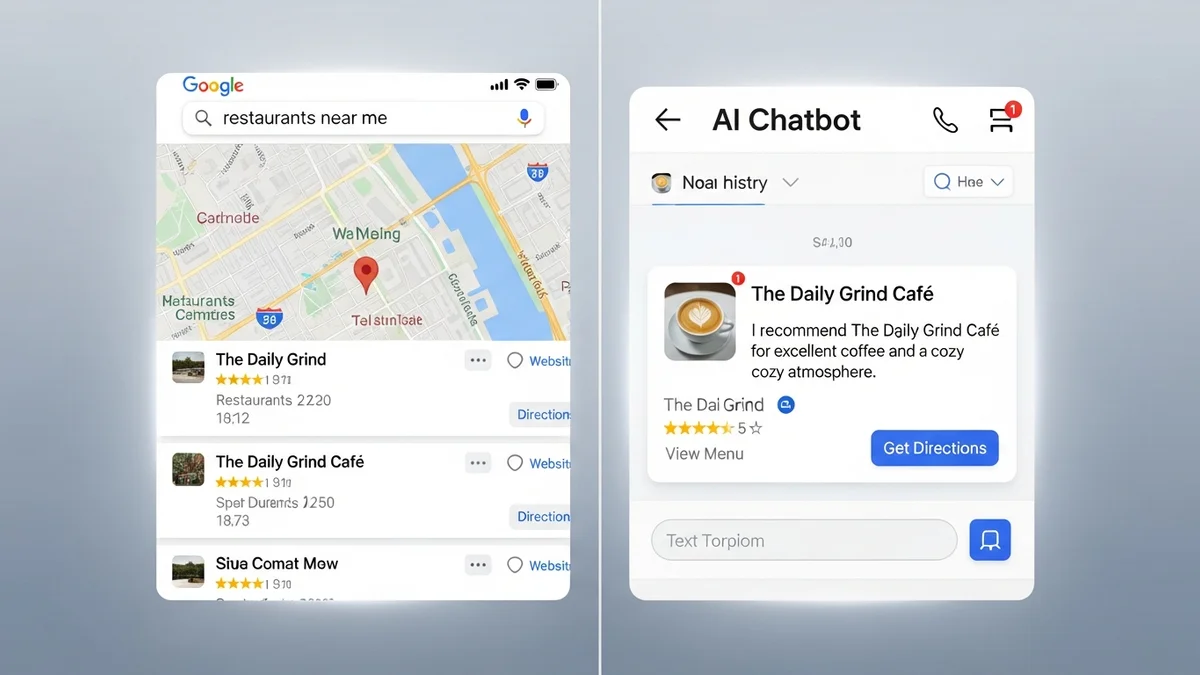
Local SEO is map-focused. AI search is about being cited in generated answers.
When you rank in the Google Local Pack, you appear as a listing in a map. The user clicks your listing or calls your number directly from the result. Success is measured by clicks, calls, and direction requests.
When you’re cited in an AI Overview or recommended by Perplexity, you’re named within a paragraph of synthesised text. Sometimes you’re linked. Sometimes you’re just mentioned by name. The user may or may not click through to your site — but they’ve received a recommendation and your business name is in their mind.
Local SEO is primarily about proximity and relevance. AI search is about authority and depth.
Google’s local algorithm weights proximity heavily — being close to the searcher and having a GBP in the right location is a major factor. AI systems are less concerned with proximity (though location queries still matter) and more concerned with whether your business is a credible, trustworthy answer to the question being asked.
A business can rank well locally with a thin website and a solid GBP. That same business will be largely invisible to AI search without substantive content.
Local SEO targets keywords. AI search targets questions.
Local SEO content is written around search terms: “electrician Ipswich,” “hot water system repair Brisbane.” AI search content is written around questions: “How do I know if my switchboard needs upgrading?” “What’s included in a hot water system service?” These aren’t mutually exclusive, but the writing approach is different.
Why You Need Both in 2026
Local SEO is not going anywhere. Google Maps results still drive enormous call and click volume for local businesses, particularly for high-intent transactional searches (“plumber near me right now”). Neglecting local SEO in favour of AI search optimisation would be a mistake.
But AI search volume is growing every month. More Australians are using ChatGPT, Perplexity, and Google AI Overviews as their first stop for research and recommendations. The businesses building AI search visibility now are accumulating authority signals that compound over time.
The practical answer is not to choose between the two. The foundational elements — GBP, NAP consistency, reviews — serve both. Beyond that foundation, dedicate specific effort to content that goes deep: question-answering articles, service pages with real substance, author attribution, and schema markup that makes your expertise legible to machines.
Local SEO gets you on the map. AI search optimisation gets you into the conversation.
Explore our Local SEO and AI Search Optimisation services to see how both work together in practice — or read How AI Search Works for Local Businesses for a deeper look at the mechanics.