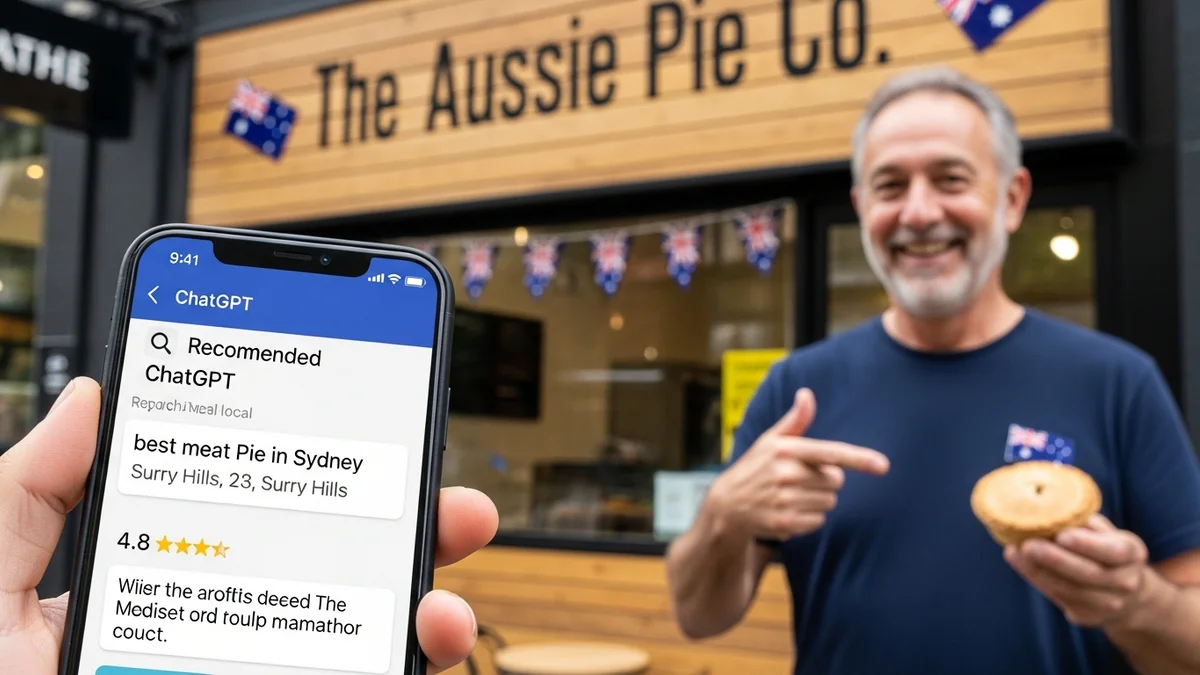
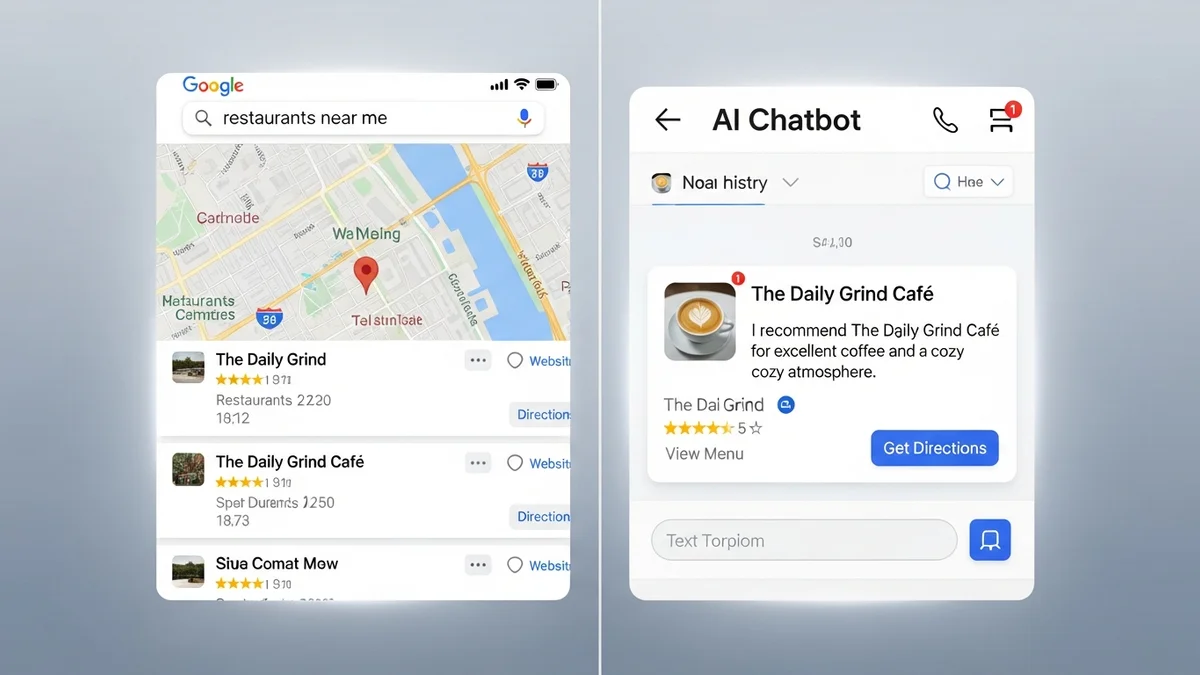
If you’ve typed “best [your service] in [your town]” into ChatGPT and your business didn’t appear, you’re not alone. Most local businesses are completely invisible to AI platforms — and the reasons go deeper than just not having a website.
Here’s what’s actually happening, and what you can do about it.
How ChatGPT Gathers Business Data
ChatGPT is not a search engine. It doesn’t crawl the web in real time and pull up whatever it finds (though newer features like ChatGPT Search do include some live retrieval — more on that shortly). The core model was trained on a massive dataset of text from across the internet: websites, directories, forums, news articles, and structured databases collected up to a certain cutoff date.
When someone asks “Who are the best electricians in Ipswich?”, ChatGPT draws on patterns in that training data. It surfaces businesses and brands that were well-represented, consistently described, and mentioned in authoritative contexts across multiple sources.
If your business only existed as a bare-bones website with three pages and no external mentions, you were likely below the signal threshold. The model had no strong basis to include you.
What “Training Data” Means Practically
You don’t need to understand machine learning to understand the practical implication: ChatGPT is more likely to recommend businesses that have left a clear, consistent footprint across the web.
That means mentions in local directories, reviews on multiple platforms, articles quoting you as an expert, your Google Business Profile being complete, your website answering specific questions — all of it creates a web of evidence that AI systems learn from.
A website with five thin pages and no external citations is essentially invisible to this process.
Why Inconsistent Directory Listings Hurt You
AI systems aggregate business data from multiple sources. If your business name is listed three different ways across Yellow Pages, True Local, and your own website — or your phone number changed six months ago and half your listings still show the old one — AI platforms pick up conflicting signals.
Conflicting signals reduce confidence. Reduced confidence means reduced likelihood of recommendation.
This is called NAP inconsistency (Name, Address, Phone number), and it’s one of the most common and most fixable problems we see at Ai Local Link.
What Structured Data on Your Site Does
Structured data (also called schema markup) is code added to your website that tells search engines and AI platforms exactly what your business is, where it operates, what services it offers, and how to contact you. It removes ambiguity.
Without it, an AI system has to infer your business type from your written content. With it, you’re explicitly labelling yourself in a format machines can read directly.
For local businesses, the LocalBusiness schema type — with your business name, address, phone, opening hours, and service area — is the baseline minimum.
Why Thin Websites Rank Poorly in AI
AI platforms are drawn to content that actually answers questions. A homepage that says “We’re a family-owned plumbing company serving Brisbane with quality service” tells an AI almost nothing useful.
A page that explains the difference between a hot water system repair and a replacement, what the signs of a failing tempering valve are, and what to expect from a same-day plumber callout — that content gets cited. It demonstrates expertise and answers the questions people are actually asking.
This applies equally to Google AI Overviews and Perplexity, not just ChatGPT. All three platforms favour content that is specific, structured, and genuinely informative over content that exists purely for credibility theatre.
5 Fixes You Can Start This Week
1. Audit your directory listings. Search your business name on Google and check every listing that appears. Note any inconsistencies in your name, address, or phone number and correct them. Start with Google Business Profile, Apple Maps, Bing Places, and Yelp.
2. Add LocalBusiness schema to your website. If you’re on WordPress, a plugin like Yoast or Rank Math can handle this. If you’re on a custom site, you’ll need your developer to add the JSON-LD code to your homepage and contact page.
3. Expand your website content. Write dedicated pages or articles that answer the questions your customers actually ask. Each page should focus on a specific service or topic, not try to cover everything at once.
4. Build authoritative mentions. Get listed in industry-specific directories. If you’re a tradie, that might mean HiPages, ServiceSeeking, or your trade association’s member directory. If you’re a professional services firm, it might mean your industry body’s website.
5. Grow and respond to reviews. Review volume and recency across Google, Facebook, and industry-specific platforms all contribute to your authority signals. AI platforms read this data. More legitimate reviews, spread across multiple platforms, builds the kind of consistent signal that gets you included.
Fixing your AI search visibility isn’t a single task — it’s a set of interconnected signals. But the businesses that sort this out now will be the ones getting recommended when their competitors are still wondering why the phone isn’t ringing.
Not sure where your business currently stands? An AI Visibility Audit gives you a clear picture of what AI platforms see when they’re asked about your business — and a prioritised list of what to fix first.